
Use the search engine below to find a specific content.
93rd General Session of the World Assembly of Delegates

The 93rd General Session of the World Assembly of Delegates of the World Organisation for Animal Health (WOAH) will take place from Monday, 18 to Friday, 22 May 2026 in Paris, France.
This invitation-only event will convene 183 WOAH Members and representatives from international organisations who have signed an official agreement with WOAH. The 93rd General Session will also bring together observer countries and territories, WOAH key stakeholders, and special guests.
As a major institutional event for the Organisation, the General Session will provide an opportunity for the World Assembly of Delegates to:
- Adopt international standards,
- Discuss technical topics of global interest,
- Adopt administrative and technical resolutions, including the 8th Strategic Plan,
- Examine and approve various reports,
- And, where applicable, proceed with the election of vacant positions within certain governance bodies.
As part of the General Session, WOAH will dedicate one day to an Animal Health Forum on the theme : “Investing in Animal Health to Secure Everyone’s Future.” The Forum will highlight the strategic role of animal health in economic stability, food security and global health resilience. It will explore solutions ranging from national resources prioritisation and innovative financial partnerships to private sector engagement and research-based innovation.
While being a face-to-face event, all sessions will offer simultaneous interpretation in English, French, Spanish, Arabic, Chinese, and Russian.
-


Report, Administrative
93GS Adm-01: Provisional Programme
.pdf – 313 KB See the document
Animal Health Forum:
Investing in Animal Health and Welfare to Secure Everyone’s Future
18–19 May 2026 | CNIT Forest, Paris
The Forum brings together a whole-of-society coalition of actors shaping the future of animal health and welfare, including government leaders such as Ministers of Finance, Agriculture, and Health; financial institutions and investors, from the World Bank Group to private investment funds and venture capital; industry pioneers across agri-food, pharmaceuticals, and AgTech; and civil society and community representatives, including farmers, livestock associations, and local cooperatives.
The 2026 Animal Health Forum centres on three complementary elements:
- A technical item : providing an analytical framework with practical examples, tools, and partnership models to strengthen animal health and welfare outcomes. Dr Franck C.J. Berthe, Senior Agriculture Specialist at the World Bank, will serve as rapporteur. The technical item will draw on expert inputs, key informant interviews, and workshops where appropriate.
- An in-person forum: In May, comprising structured discussions among high-level representatives, experts, and WOAH delegates through six thematic panels.
- Adoption of a WOAH resolution: to guide Members, partners, and WOAH’s future initiatives.
The investment paradox
Animal health and welfare underpin food security, human well-being, trade and economic prosperity across communities and value chains. Yet, despite a global livestock market valued at US$1.37 trillion, investment in animal health and welfare remains chronically underfunded. This mismatch between economic importance and financing constitutes a clear investment paradox.
The cost inaction is tangible. Many WOAH Members lack the minimum operational or emergency funding for their Veterinary Services, weakening prevention, detection and response capacity and creating systemic risks that spill beyond borders and supply chains. These vulnerabilities increasingly impact markets, investors, and national economies.
At the same time, the returns on investment are compelling. Investments in antimicrobial resistance (AMR) control alone are estimated to yield annual returns of 31–88%. More broadly, bringing Veterinary Services worldwide up to WOAH international standard compliance would cost just US$2.3 billion annually, roughly 0.1% of the livestock market’s value and less than 0.05% of the direct cost of COVID-19.
The challenge lies not only in mobilising the needed capital, but allocating responsibility. Animal health and welfare activities generate a mix of both public and private benefits, at both national and global levels. While the principle that “those who benefit should pay” is widely cited, it is difficult to apply in practice: animal health and welfare benefits spill over borders, along value chains, and between public and private actors, and no single stakeholder (whether government, producers, industry, or consumers) can bear the costs alone. Capacity to pay also varies widely, and there is therefore no universal funding formula. Financing decisions must therefore balance “the ability to pay” with mechanisms that share costs fairly and equitably among all beneficiaries.
The central question: who should pay for what in animal health and welfare, and how can investment be structured to share risks fairly and equitably while delivering sustainable returns?
The 2026 Animal Health Forum aims to:
- Build political momentum on why investment in animal health and welfare as a strategic priority, spanning national and global dimensions
- Define who should invest, pay, and co-finance by framing health and welfare as a continuum of public and private goods
- Build consensus on an investment framework that enables a fair and feasible allocation of costs and benefits, taking into consideration both capacities to pay and benefits received
- Show how investment can be translated into action, by highlighting practical, scalable financing and delivery models drawn from diverse national and regional contexts or value chains
- Demonstrate how improved animal health and welfare de-risks investment, by equipping participants with clear evidence and targeted messages adapted to different audiences
- Adopt a resolution to pave the way for WOAH, Member and stakeholder actions and investment strategies.
From “Cost” to “Strategic Investment”
The World Organisation for Animal Health (WOAH) is the intergovernmental body responsible for improving animal health and welfare worldwide. Established in 1924, it works with 183 Member Countries to set international standards, ensure transparency on animal health, and strengthen Veterinary Services through capacity building and global programmes.
Each May, WOAH convenes its General Session, bringing together over 150 countries and around 1,300 participants. The first two days are dedicated to the Animal Health Forum, which each year focuses on a strategic issue of global relevance. To support discussions, WOAH develops a technical item, shared in advance with Members to frame the debate during the Forum and provide evidence-based insights.
Venue: Baobab 2
- The AMR Corner-Securing our future
- Publications and Documentation
- One Health
- World Animal Health Information and Analysis Department and WAHIS
- WildEpi & Wildlife Health Hub
- STAR IDAZ IRC
- International Coalition for Animal Welfare
- BioPREVAIL
- Cyberbiosecurity Research
- The WOAH Observatory
- WOAH’s Official disease status
- IHSC – Representing Horse sports
- ASF-AID: Theory to Practice
- The WOAH Capacity Building System
- Together Against TADs
- Regional support to members
- Essential Veterinary Medicines List for food producing animals
- The World Bank Group
- WOAH Gift Shop
Side events
HPAI vaccination and trade
Date: Mon 18, 12h45 to 13h45
Venue: Davidia 1&2
The Netherlands, some other member countries, EU and WOAH plan a side event with the aim to have a discussion about vaccination against HPAI, and the potential impact on international trade. It also aims to provide a platform for collaboration among countries to work on the acceptation of products of vaccinated poultry.
MSD Lunch & Learn Panel Discussion — “Veterinary Workforce Shortages: The Americas’ and Global Perspectives.”
Date: Tue 19 May, 13h15 – 14h15
Venue: Dragonnier 3
With the WOAH Regional Representative, officials, and industry experts, we will explore the scale and drivers of shortages, sectoral contrasts and sectors’ roles in surveillance, preparedness, and response, collaboration opportunities, and veterinary education.
Capacity, Collaboration, and Capital: Veterinary Services for the Future by leveraging 20 Years of PVS insights
Date: Tue 19 May, 13h15 – 14h15
Venue: Dragonnier 4
Drawing on 20 years of insight from the PVS Pathway, panelists will explore how strong institutional capacity underpins resilient and future-ready Veterinary Services and share their perspectives to highlight how PVS informed improved governance, legislation, financing, training, and service delivery, by connecting capacity, collaboration, and capital.
Mobilising Investments for dog mediated Rabies Elimination: Country experiences and Partner perspectives
Date: Tue 19 May, 13h15 – 14h15
Venue: Dragonnier 5
This session explores how countries and partners are unlocking investment for rabies elimination—sharing practical financing strategies, partnership approaches, and what makes a compelling case to attract sustained support.
Investing in Animal Welfare: from Standards to Implementation
Date: Tue 19 May, 13h15 – 14h15
Venue: Dragonnier 6
The panel will discuss why animal welfare investment is a strategic choice, not just a cost. It will show how WOAH standards provide a common framework to prioritise and mobilise public and private investment in animal welfare while ensuring animal and public health and sustainable economic and social progress.
Improving Veterinary Medicines Regulation: A Self-Assessment Tool Designed for members
Date: Tue 19 May, 17h – 18h
Venue: Dragonnier 3
This interactive session will introduce the Veterinary Medicines Regulatory Agency Self-Assessment Tool (VMRA-SAT), designed to support Members in identifying strengths, gaps, and priorities in their veterinary medicines regulatory systems. The session will also provide an opportunity to explore how the tool can support national reforms and to share your views to help shape its future development
Overcoming Under-Investment in Animal Health Challenges and Opportunities
Date: Tue 19 May, 17h – 18h
Venue: Dragonnier 4
This session aims to address the real-world constraints and enablers shaping investment in animal health. It will unpack key structural barriers, highlight practical examples of what works, and bridge perspectives across public, private, and regulatory actors. Ultimately, the discussion seeks to position animal health as a strategic investment priority by identifying actionable pathways to translate it from a public good into scalable, investable models.
GF‑TADs FMD Roundtable: Investing in Effective and Sustainable FMD Control
Date: Tue 19 May, 16h45 – 18h
Venue: Dragonnier 5
This GF‑TADs side event will review the current global epidemiological landscape of FMD and examine emerging challenges affecting control efforts. It will focus on identifying strategic gaps and priorities to inform the revision of the Global FMD Control Strategy, with attention to effective, sustainable, and high‑impact actions.
PREVENT Forum: Action starts now
Date: Tue 19 May, 16h45 – 18h
Venue: Dragonnier 6
The PREVENT Forum is a public-private partnership aiming to move towards more proactive disease prevention by 2030. Responding to a resolution adopted by all WOAH Members in 2025, it will seek to address barriers to animal vaccination: Planning, Regulatory pathways, Economic evidence, Vaccine access, Equity, National strategies, and Trade.
“30 Years of Official Animal Health Status Recognition”: Supporting Safe Trade and Global Animal Health
Date: Wed, 20 May, 12h25 – 13h45
Venue: Dragonnier 3
This side event will mark the 30th anniversary of WOAH’s official animal health status recognition by showcasing its value and impact, explaining how it operates and has evolved, and exploring priorities to ensure it remains credible, responsive and fit for purpose.
P3V, a concrete approach for integrating PPVs into accessible, inclusive and sustainable Veterinary Services
Date: Wed, 20 May, 12h25 – 13h45
Venue: Dragonnier 4
After five years of implementation, the P3V project has generated tools and approaches that strengthen an environment enabling to the veterinary profession and the integration of VPPs. This Side Event aims to highlight the results and promote the best practices developed for accessible and high-quality veterinary services.
4th Meeting of the GF-TADs Global Coordination Committee on African Swine Fever
Date: Wed, 20 May, 12h25 – 13h45
Venue: Dragonnier 5
Bringing together the Chairs of the GF-TADs Regional Steering Committees and SGE-ASF members to discuss technical priorities of each region and launch the ASF Global Initiative 2026–2030.
World Fund Advisory Committee
Date: Wed, 20 May, 12h25 – 13h45
Venue: Dragonnier 6
This meeting is by invitation only. The Advisory Committee is an institutional meeting held annually in May, on the margins of the General Session, as outlined in the WOAH Basic Texts. It serves as a unique platform for dialogue between resource partners, multilateral development agencies, and select stakeholders, helping to shape the Fund’s strategic vision and resource mobilisation efforts.
Overarching Framework for Animal Movement Control Systems – WOAH Initiative
Date: Thurs 21 May, 13h15 – 14h15
Venue: Dragonnier 3
Animal movements (domestic/wild, legal/illegal) drive animal transboundary diseases and zoonoses spread, and biodiversity loss. WOAH framework promotes a risk-based system approach integrating governance, implementation, law enforcement, surveillance, and monitoring.
From Evidence to Investment: Leveraging partnerships, science and innovations for safe trade
Date: Thurs 21 May, 13h15 – 14h15
Venue: Dragonnier 4
This STDF event will explore how evidence, partnerships and innovation can boost investment in animal health systems. It will highlight STDF experiences and practical pathways to strengthen standards uptake and facilitate safe trade.
Gender Equality, Disability and Social Inclusion (GEDSI) in Global Veterinary Governance: From Principles to Practice
Date: Thurs 21 May, 13h15 – 14h15
Venue: Dragonnier 5
How can gender equality, disability and social inclusion (GEDSI) strengthen veterinary systems? This interactive session will explore how inclusive approaches improve access, participation and protection within animal health governance. As GEDSI is now integrated under Enabler 3 of WOAH’s 8th Strategic Plan, the discussion will move from principles to practice. Four Members (Brazil, Chad, Côte d’Ivoire, United Arab Emirates) will share concrete experiences and lessons learned. Participants will then work in small groups to identify realistic actions that could be implemented in the coming years and explore how WOAH can support them. The session aims to foster collaboration, peer learning and practical solutions across regions.
Climate Change and Animal Health: Contributions, Impact and Solutions through a One Health Approach
Date: Thurs 21 May, 13h15 – 14h15
Venue: Dragonnier 6
This side event explores the impacts of climate change on animal health and presents One Health solutions. It highlights risks, shares WOAH insights, and discusses policy and tools to strengthen climate-resilient animal health systems and support integrated action.
Advancing Global Wildlife Health: Launch of the updated WOAH Strategy
Date: Fri 22 May, 12h45 -13h45
Venue: Dragonnier 3
Join us to unveil WOAH’s revised Global Wildlife Health Strategy. Discover key achievements of the previous Wildlife Health Framework with insights from contributing Members, and how investment in wildlife health through a One Health approach can address climate change, wildlife trade risks, and strengthen environmental resilience
Foresight, horizon scanning and epidemic intelligence to improve risk monitoring and preparedness
Date: Fri 22 May, 12h45 -13h45
Venue: Dragonnier 4
This is a joint event organised by WOAH – Data Integration and Analytics Department and the G7 CVO representatives of Canada and France. The side event will focus on epidemic intelligence, forecasting and real-time surveillance. The aim is to i) clarify key concepts in epidemic intelligence, horizon scanning, forecasting, ii) discuss available tools and approaches, and iii) highlight how WOAH and its partners and network of experts can support its members, particularly through quantitative methods based on data collected by WOAH and other institutions.
CVO AMR Lunch: Sharing Experience, Shaping Global Action
Date: Fri 22 May, 12h45 -13h45
Venue: Dragonnier 6
This invitation only third annual CVO AMR Lunch welcomes CVOs to share insights on barriers and opportunities for addressing AMR with their peers. Drawing on diverse country perspectives, the meeting aims to foster cooperation and coordinated action towards our shared global commitment to prevent and control AMR and advance animal health. This side event is by invitation only.
Where?
NEW PLACE!
CNIT Forest, 2 place de la Défense, 92092 Puteaux
When?
From Monday 18 to Friday 22 May 2026
How to arrive?
By metro
Metro line 1: Stop ‘La Défense – Grande Arche’
Exit CNIT / Parvis / Grande Arche
The CNIT Forest is directly accessible from the esplanade.
By RER
RER A: Stop ‘La Défense’
Follow the exit CNIT
Direct access from Parisian stations (Châtelet-Les Halles, Auber, Gare de Lyon, etc.)
RER E: Stop ‘La Défense – Grande Arche’
Direct access from Gare Saint-Lazare, Magenta (Gare du Nord / Est), Haussmann – Saint-Lazare and Porte Maillot.
By Transilien train
Line L (from Paris Saint-Lazare): Stop ‘La Défense’
Line U (from Versailles): Stop ‘La Défense’
By tramway
T2: Stop ‘La Défense’
Direct link to Issy-les-Moulineaux, Porte de Versailles and metro line 13 at Porte de Garibaldi
By bus
Many RATP bus lines (Lines 73, 141, 144, 159, 258, 360, etc.).
Find the right ticket for your needs (https://www.ratp.fr/titres-et-tarifs).
Travel Sustainably
For getting around Paris and the surrounding region, we encourage you to use public transportation whenever possible to help reduce your carbon footprint. To make your journey easier, you may find it helpful to download apps such as Citymapper or Île-de-France Mobilités, which provide real-time route planning, schedules, and service updates across metro, RER, bus, and tram networks.
With the Île-de-France Mobilités app, you can purchase and store tickets directly on your phone and validate them at gates, meaning you do not necessarily need to buy a physical Navigo card. Alternatively, if you already have a Navigo pass, you can easily top it up via the app. Please note that traditional paper tickets were discontinued in 2025 as part of the region’s transition to digital ticketing, making mobile or contactless options the most convenient and efficient way to travel during your stay.
Hotels close to the CNIT Forest
For any stay at an Adagio hotel, enjoy a 15% discount (stays of 3 nights or more) or a 10% discount (stays of 1 or 2 nights) with the company ID SCP4611319 and access code OR537FR886.
PARTNER – Aparthotel Adagio Access La Défense Puteaux | (Serviced apartment)
19 min walk
PARTNER – Aparthotel Adagio La Défense Esplanade | (Serviced apartment)
12 min walk
PARTNER – 9Hotel Bastille-Lyon***
25 min by transport (RER A)
Mama Shelter Paris La Défense***
19 min walk
Hilton Paris La Défense****
1 min walk, inside CNIT
CitizenM Paris La Défense****
12 min walk
Meliá Paris La Défense****
14 min walk
Hotel Mercure Paris La Défense Grande Arche****
17 min walk
TRIBE Paris La Défense Esplanade****
23 min walk
Hotel La Régence***
13 min walk
Ibis Styles Puteaux Paris la Défense***
20 min walk
Ibis Paris La Défense Esplanade***
17 min walk
Hotel Vivaldi La Défense***
20 min walk
Hotel Le Dauphin***
20 min walk
Best Western Seine West Hotel***
28 min walk
Hotel Douglas Puteaux***
24 min walk
Hotel The Social Hub
19 min walk
Fraser Suites Paris La Défense | (Serviced apartment)
18 min walk
Staycity Aparthotels, Paris, La Défense | (Serviced apartment)
24 min walk
Citadines La Défense Paris | (Serviced apartment)
17 min walk
Working documents
Administrative reports
-
Report, Administrative
93GS Adm-01: Provisional Programme
.pdf – 313 KB See the document -
Administrative
93GS Adm-02 : DG Activities Report
.pdf – 2 MB See the document -
Report, Administrative
93GS Adm-03: Director General’s Report on 2025 WOAH Management, Activities and Administrative Work
.pdf – 545 KB See the document -
Report, Administrative
93GS Adm-04: WOAH Eighth Strategic Plan for the period 2027 -2031
.pdf – 675 KB See the document -
Report, Administrative
93GS Adm-05: Report of the Governance Review Committee
.pdf – 911 KB See the document -
Administrative
93GS Adm-06: MoU GALVmed
.pdf – 357 KB See the document -
Report, Administrative
93GS Adm-07: MoU IMS
.pdf – 289 KB See the document -
Report, Administrative
93GS Adm-08: MoU WBG
.pdf – 275 KB See the document -
Report, Administrative
93GS Adm-09: MoU WDA
.pdf – 322 KB See the document -
Report, Administrative
93GS Adm-11: Regional Conferences
.pdf – 456 KB See the document
Financial reports
-
Report, Financial
93GS Fin-01:2025 Financial Report
.pdf – 2 MB See the document -
Report, Financial
93GS Fin-04: Adjustments to the 2026 Budgeted Work Programme
.pdf – 482 KB See the document -
Report, Financial
93GS Fin-05: 2027 Budgeted Work Programme, Income Estimates and Related Contribution Scale
.pdf – 811 KB See the document -
Report, Financial
93GS Fin-06: Proposal for the Amendment of the Provisions in Chapter VI, Article 60.2-c of the Staff Regulations
.pdf – 709 KB See the document
Technical reports
-
Technical
93GS Tech-01: Technical Item
.pdf – 1 MB See the document -
Report, Technical
93GS Tech-02: Animal Health Situation
.pdf – 1 MB See the document -
Report, Technical
93GS Tech-03: Wildlife Working Group
.pdf – 389 KB See the document -
.pdf – 1 MB See the document
-
Report, Technical
93GS Tech-05: Code Commission
.pdf – 721 KB See the document -
Report, Technical
93GS Tech-06: Scientific Commission
.pdf – 201 KB See the document -
Report, Technical
93GS Tech-07: Aquatic Animals Commission
.pdf – 1 MB See the document -
Report, Technical
93GS Tech-08: Biological Standards Commission
.pdf – 6 MB See the document
Draft resolutions
-

Resolutions, Administrative
93GS-Draft Res-04: Recommendations and Updates to the Work Programme Timelines of the GRC
.pdf – 569 KB See the document
Code of Conduct during WOAH 93rd General Session
If you witness or are a victim of harassment at the 93rd General Session, please go to the Chêne Office (level C) and/or write to [email protected]
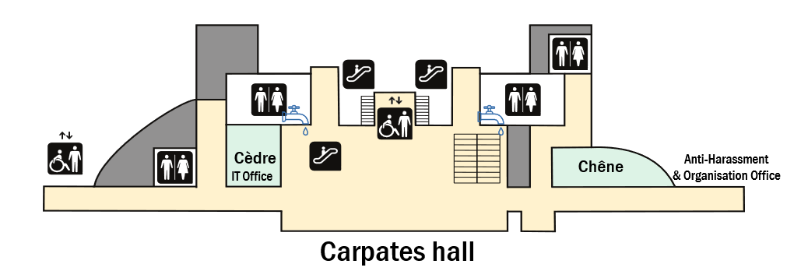
WOAH is committed to providing a safe environment for all staff members and meeting participants, free from discrimination of any kind and all forms of inappropriate behaviour and harassment. This commitment applies across all WOAH premises, including Headquarters, Regional and Sub-Regional Representation offices, as well as during any events organised by WOAH, such as the General Session of the World Assembly of Delegates, Regional Commissions meetings, conferences, and capacity building events.
WOAH enforces a zero-tolerance policy for any form of harassment, whether moral or sexual, in the workplace and during its events. All allegations will be taken seriously and addressed promptly and thoroughly.
Harassment refers to any behavior that causes someone to feel intimidated, humiliated, or offended. Harassment may consist of a single serious incident or a pattern of behaviour over time. Harassment can be physical, sexual, verbal, and non-verbal. Examples of conduct or behavior that may constitute inappropriate behaviour or harassment include, but are not limited to:
Verbal Conduct
- Comments on a person’s appearance, age, private life, etc.
- Sexual remarks, comments, stories and jokes
- Repeated and unwanted invitations to social events, dates, or physical intimacy
- Sexist insults or remarks
- Condescending or paternalistic remarks
- Sending sexually explicit messages (via phone, email or other means)
Physical Conduct
- Unwelcome physical contact
- Acts of physical violence, including sexual assault
- Using of job-related threats or rewards to solicit sexual favors
Actions to be Taken during Events
WOAH treats all allegations of misconduct seriously. During events organised by WOAH, a designated focal person will be appointed to receive any complaints raised by an employee or participants. The first step will involve the focal point discreetly approaching the alleged perpetrator, informing him/her of the allegation(s), and discussing the incident. In many cases, the matter may be resolved through dialogue, with clarification of behaviour that may be culturally inappropriate. However, in cases involving serious misconduct or repeated inappropriate behavior, the focal point will escalate the matter. This may result in appropriate consequences, including a request for the alleged perpetrator to leave the event.
We are committed to creating a sustainable, inclusive, and respectful event environment. Your participation plays an important role in helping us achieve this.
Bring your water bottle
We encourage you to bring a reusable water bottle, as refill stations will be available throughout the venue. Each participant will also receive a tote bag to carry materials and personal items, we invite you to use it throughout the event instead of single-use bags.
Think before you print
To reduce paper waste, we prioritize digital communication. Event materials are available on our website and on the WOAH event app. We encourage you to use digital agendas and documents whenever possible, and to print only when necessary.
Sort it right
Recycling stations are placed across the venue to make waste sorting easy. Please follow the signage to separate waste correctly. When in doubt, use general waste to avoid contamination. You can also recycle your badge and lanyard in designated areas. Lanyards will be sanitized after the event.
Eat with impact in mind
We have taken steps to reduce the environmental footprint of our catering, including offering vegetarian options and selecting seasonal and local ingredients where possible. We also aim to minimize food waste. You can help by taking only what you need and avoiding unnecessary waste.
Choose greener ways to get around
We encourage participants to consider environmentally friendly transport options, such as public transportation or walking for short distances. Planning your journey in advance can help reduce unnecessary travel. For more information on getting around using public transportation, please refer to the Practical Information section.
Accessible for everyone
We are committed to making the event accessible to all participants. Step-free access and elevators are available, along with clear signage throughout the venue. Translation and interpretation are provided in three WOAH official languages. Additional support may be available upon request. If you need assistance, please go to the info desk on Level C.
Respect & inclusion for all
We are committed to providing a safe, inclusive, and harassment-free environment for all participants. We kindly ask everyone to treat others with respect and consideration at all times. Discriminatory or inappropriate behavior will not be tolerated. If you need support, please contact WOAH staff onsite or refer to the Code of Conduct.
Multipurpose room
A quiet and private space, accessible to all, is available for participants who may need it. The Multipurpose Room (Davidia 4, level D) can be used for prayer, quiet reflection, breastfeeding, or simply taking a moment to rest in a calm environment, including for neurodivergent participants who may benefit from a low-stimulation space.